
R.H.S.R.A.G.M.
RHS Rage Against the Garden Machine

I was wondering what to write about this week, until I received what I think is known in news circles as breaking news. You might need a cup of tea for this one.
The Royal Horticultural Society has been undergoing a few changes in its branding. Most of it is stuff nobody will actually notice, like staff uniforms and the fonts used on printed materials and so on. Things enormously important to branding companies but of little to no interest to absolutely anyone else. Apparently we’re not supposed to refer to the Royal Horticultural Society, instead using RHS, all apparently in an effort to make the Royal Horticultural Society appear to be less exclusive.
Appear less exclusive. This is a branding exercise, nothing else.
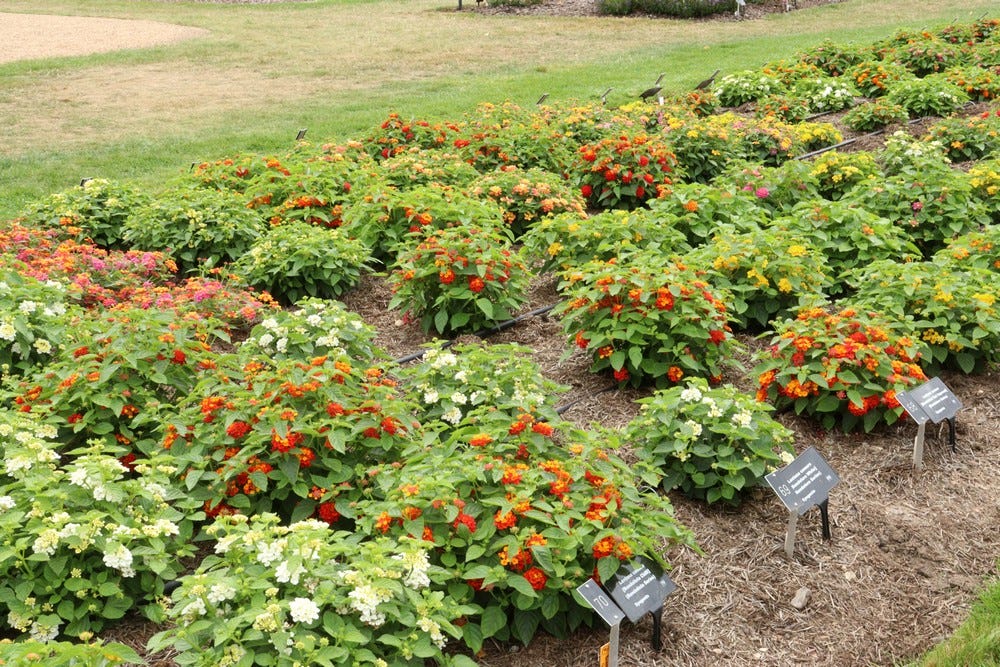
I’d had a tip-off that the Award of Garden Merit was getting rebranded too. Apparently somebody thought the letters ‘AGM’ on a plant label or after a plant name would assume it stood for Annual General Meeting, or some nonsense like that. Thus the award has a new name.
RHS Recommends: Award of Garden Merit.
Maybe the RHSRAGM for short.
There’s a new logo to go with the newly rebranded AGM (that’s the Award of Garden Merit and not an Annual General Meeting). Woo!
I’m not really sure why they bothered. The Award of Garden Merit has been in existence since 1922, that’s 104 years without issue, so why does it need to be changed? My issue isn’t so much with the rebranding – the RHS can rebrand themselves as much as they like – but the general assumption that seems to exist that gardeners are idiots and everything needs to be made simple. I’ve done my years in horticultural retail, I’ve explained to curious customers what the letters AGM stand for on labels, and it’s never been a problem for people. In many cases picture labels have the Award of Garden Merit logo with the words there for people to read.
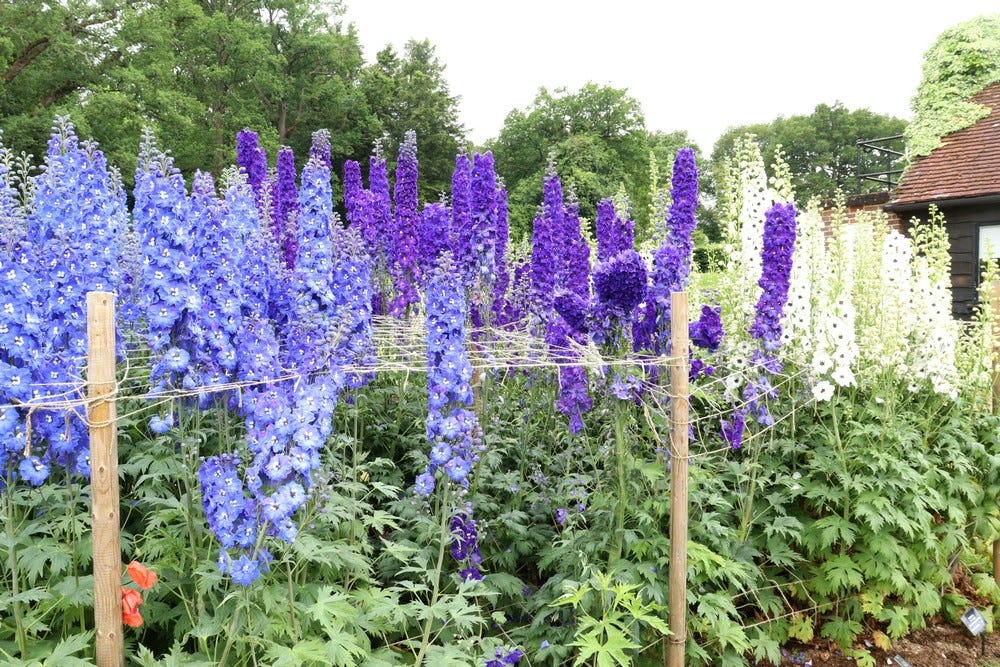
The question of what the Award of Garden Merit actually is has always been around. It’s answered by the RHS’ own website, by nursery staff and a wide range of horticulturists, professional and non-professional. No gardener was born knowing what the AGM is; we’ve all had to learn. Despite this the AGM has managed to become an internationally recognised standard of excellence, although it’s worth pointing out that there are both positives and negatives associated with trialling plants.
The purpose of plant trialling is to gather plants together in one place so that they can be compared under as close to uniform standards as humanly possible. Straight away this brings up two problems. Firstly trialling in one garden only really means that plants performed well in that particular garden at that particular time. Things like soil type and local climate can affect the performance of plants quite significantly, and this can not only go region to region but can even vary between neighbouring gardens. A plant that thrives in the South East of Britain, for example, might not do as well in Scotland, and one that thrives in the cool damp of Scotland might very well not do as well in the South East.
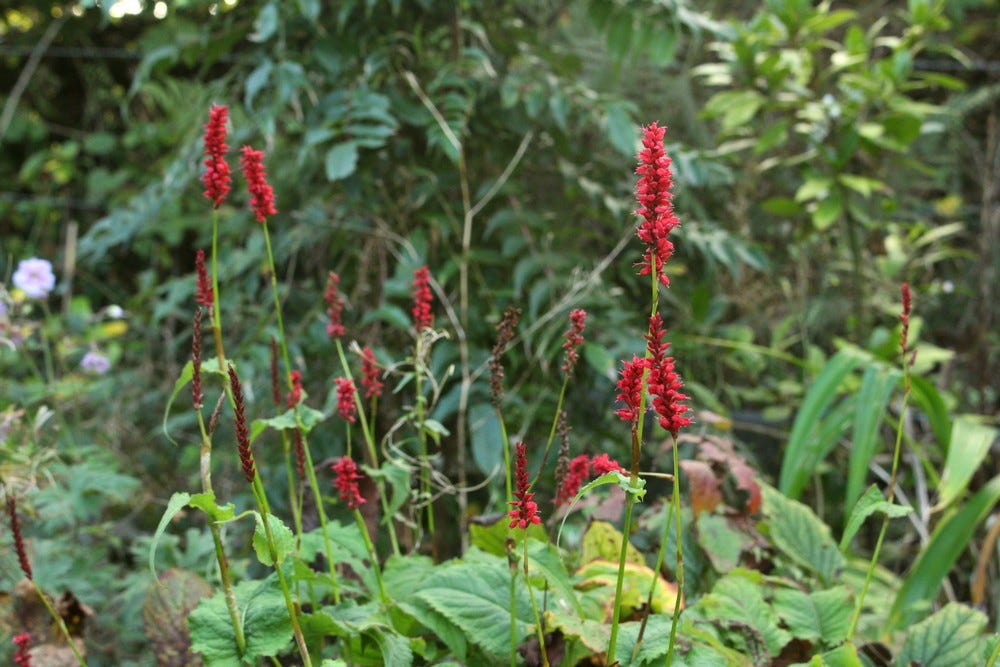
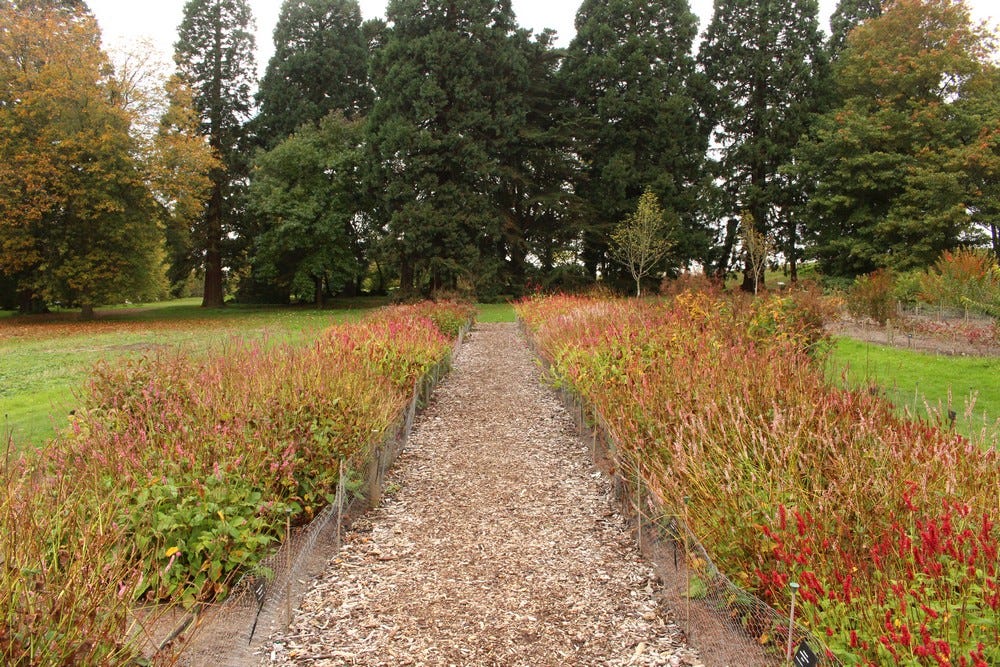
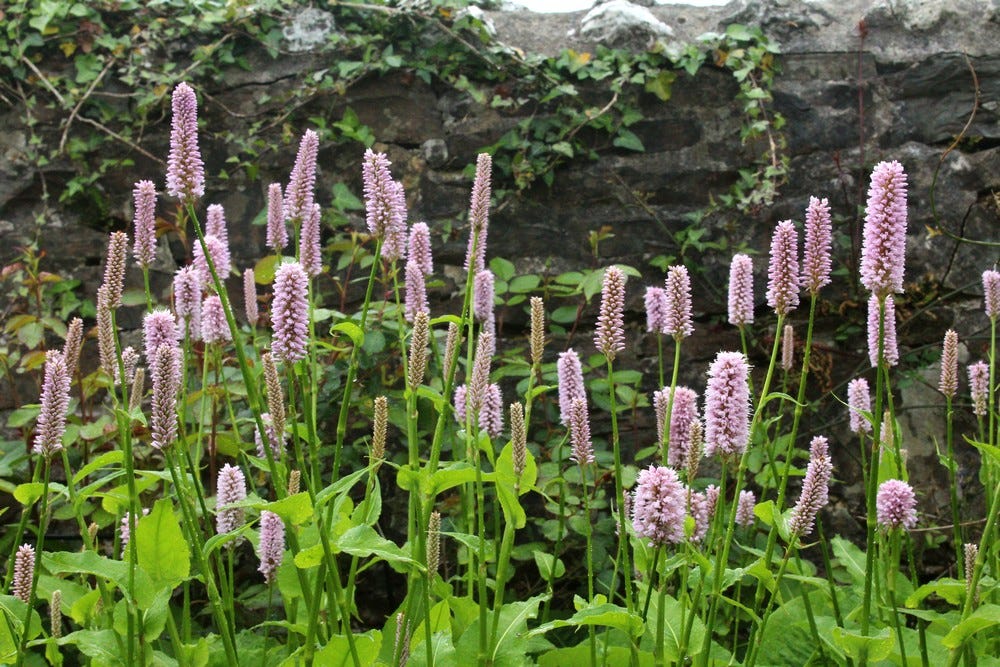
To add to this complication there can be variations between varieties of the same genus and even species, for example like Bistorta amplexicaulis ‘Anne’s Choice’ being particularly suited to cool shade while other forms of Bistorta amplexicaulis are a bit less specific in their needs. In the AGM trials for persicaria et al. at Wisley several years ago ‘Anne’s Choice’ did very badly. The whole bed was bathed in sun so poor little ‘Anne’s Choice’ didn’t stand a chance.
In defence of the RHS trials there is no right answer. Very few genera have uniform requirements, but at the same time tailoring conditions to suit individual plants isn’t going to give a fair comparison. It’s not unusual for trials to include some plants that really don’t like the same conditions as others, so it’s left to the panels of plant experts assessing the plants to interpret what they’re seeing. There’s a geranium trial at wisley that is sure to have this problem; some plants do better under different conditions than those of their trial beds, but it’s just not possible for the RHS to trial everything in several different gardens.
Plant trials can’t ever hope to keep up with every plant in cultivation. They’re expensive to run and as time passes new plants of a genus previously trialled are released, so it’s inevitable that there will be plants that haven’t receives awards that probably should. Added to that there are genera that only have a few species and varieties that are just not viable to trial.
For all its flaws the Award of Garden Merit is better than nothing. It’s an attempt, and a fair attempt at that, to help gardeners choose good plants. AGM plants are not guaranteed to be amazingly successful everywhere, so the award should only reasonably be treated as guidance and not a guarantee.
The Award of Garden Merit has value. If it didn’t then I definitely wouldn’t waste my time being involved with plant trials.
This rebranding seems so utterly pointless. The new name doesn’t explain why some plants are awarded and others aren’t, at least no better than the previous name. Why not simply make more effort to explain the AGM, and its significance and value?
What irritates me is the idea that something needs changing for modern gardeners. The Award of Garden Merit has existed for 104 years but for some reason the new generation of gardeners needs everything made super easy for them. This attitude is not unique to the RHS by any means; it’s become a guiding force for garden media and even the very core of gardening culture.
Over on GardenRant I wrote about New Horticulture and the current trend that anybody with a phone can be a gardening expert. The bastardising of the Award of Garden Merit fits firmly into New Horticulture for me; rather than guide gardeners and encourage learning we must devalue everything to fit with the banal nothingness of 21st century culture. I’m left wondering how long my involvement with plant trials will continue before my place is taken by someone with absolutely no plant knowledge but a 50,000 followers on TikTok.
Gardening isn’t about how pretty something looks or how trendy the gardener is. In a world of instant gratification gardening teaches us patience and how to be at peace with our surroundings. But we must make an effort to connect. There are no shortcuts to true expertise. Tricks and hacks don’t make us great gardeners, they just provide a thin veneer of respectability that falls away so easily when times get hard.
Rebranding things doesn’t make them better. Rebranding exercises make money for a few companies but seldom actually bring meaningful changes and improvements. The RHS has already made a significant leap with the AGM by moving its trials around the UK; they used to be a Wisley thing, largely irrelevant to anyone outside the South East of England, but trialling plants in other areas acknowledges that there are differences in growing conditions and makes a useful effort to address something of a historical imbalance in how the RHS has carried out its trials. It also places the trial process in full view of a wider audience, not just those visiting Wisley.
I strongly suspect that apathy will, if not win against, frustrate rebranding efforts. The Award of Garden Merit has been an iconic part of the gardening world for so long that I doubt there will a great rush to embrace the new brand. The whole exercise fails to realise the brilliant simplicity of the Award of Garden Merit, or AGM where abbreviated. Where space is limited in catalogues and on plant labels ‘RHS Recommended: Award of Garden Merit’ or ‘RHS Recommended: AGM’ just won’t be adopted. Why use 33 or 18 letters when you can convey the exact same meaning with just A, G and M?
I understand that the Royal Horticultural Society, sorry the RHS, wants to make more of its plant awards. It would be hard to argue that this wouldn’t be a good thing, and I hope that the First Class Certificate or FCC, given to plants of particular note at flower shows, also gets a bit more recognition. My argument is that changing the name of an award that has existed for over a century does nothing to serve the interests of gardeners.
Publicity around the Award of Garden Merit has waned in recent decades, and more should be done to draw attention to it. The RHS is astonishingly good at promoting things to its own members in its own magazine, yet woeful when it comes to engaging with the wider gardening world. What better way to engage a new audience than telling a story that started 104 years ago and continues to this day.
The stupid thing is this. Unless you are part of the 60+ generation who belong to clubs and societies, you won't know that AGM can stand for Annual General Meeting anyway. And you'd have to be too dim to read a plant label to look at one and think AGM stands for a meeting in that context. Old fogey attempt to rebrand for how they think the young will read things: vaguely patronising?
Question: do you know whether they paid some kind of PR firm to come up with the rebrand or if they had someone, clearly needing to justify their job, think it up in house? Possibly by committee?