
Judgement Time
A weekend of flowers and silverware.

This weekend will be a busy one for me. It’s the Early Spring Show at Rosemoor in Devon, or the Early Spring Showcase as the newly rebranded RHS prefers we call it.
For some it is a competition where gardeners pit bloom against bloom in the hope of winning a shiny trophy to take home. For others it’s a celebration of the beauty of spring. For me it is both.
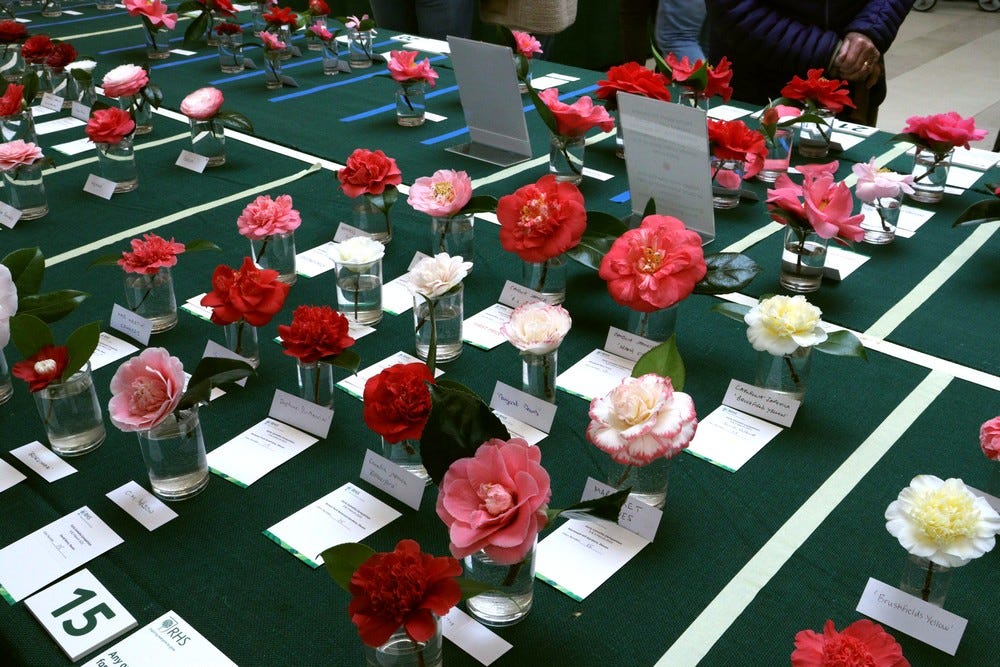
I’m there in an official capacity. On Saturday morning I will be there, clipboard in hand, as part of the camellia judging team. Judging camellias is remarkably challenging, as I’ve discovered over the last few years. There is a great difference between what is acceptable in the garden and what will cut the mustard on the showbench. In the garden we are far more accepting of minor blemishes – a little knock here and a brown spot there – but on the bench only the best will do.
In many ways it’s not really my world. I’m as capable as any other gardener and plant enthusiast of enjoying pretty flowers, but I don’t have a particularly competitive spirit and have a high tolerance of imperfection. What I do have, and what is vital for a specialist judge, is a reasonable eye for detail and a fairly solid plant knowledge.
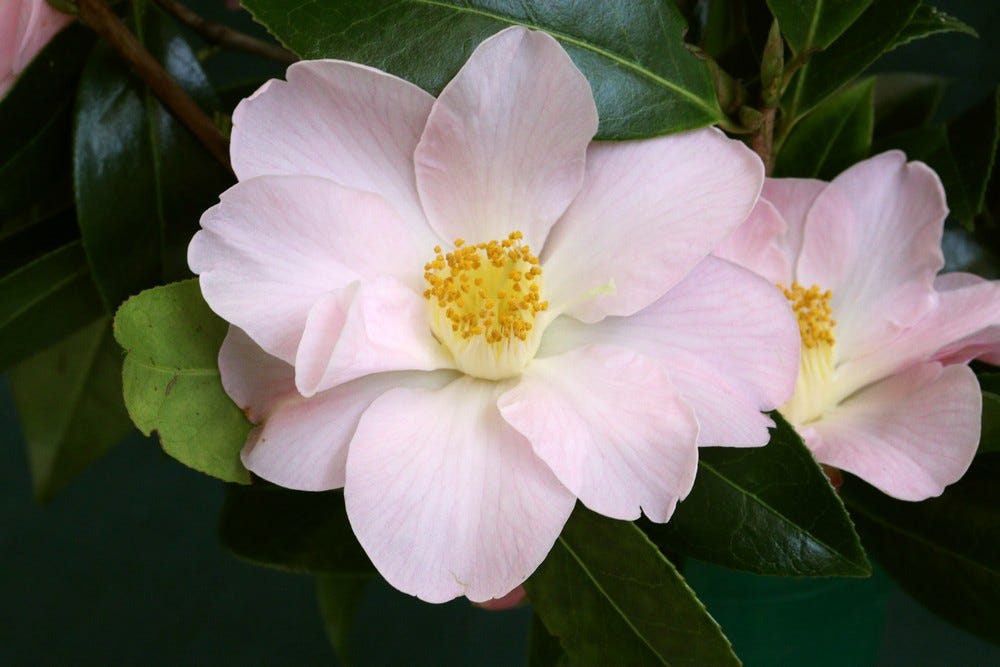
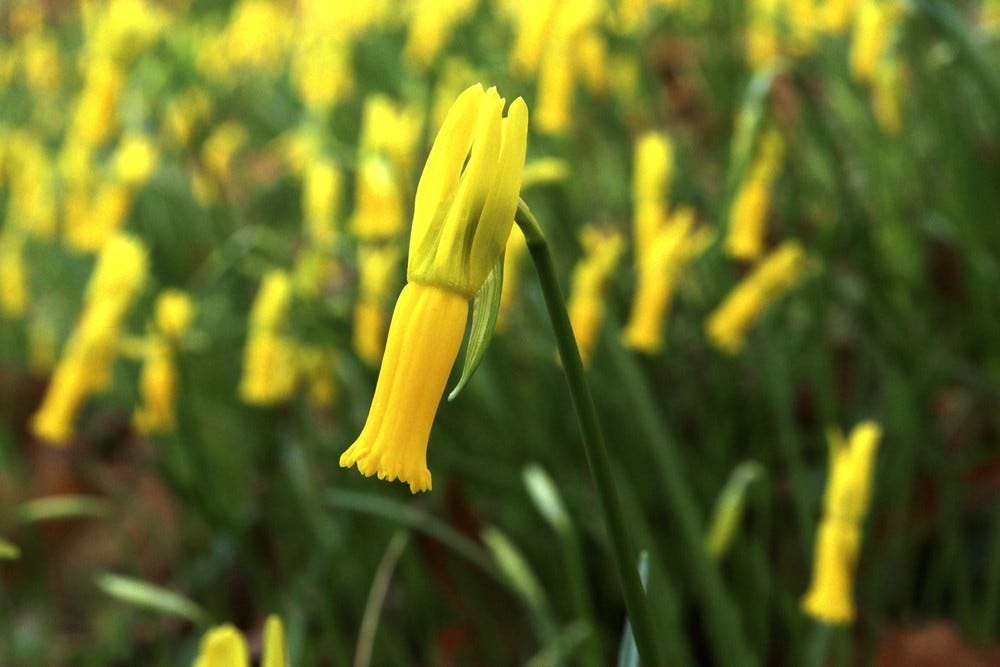
The latter point is very important indeed. I remember being more than a little disappointed when I took an absolutely perfect flower of Narcissus cyclamineus to a local village flower show, only for it to be beaten by three weather-damaged daffodils that took first, second and third place. The judge told me that while he acknowledged that while the prize winners were a bit damaged, my little flower was so badly damaged that he was surprised that anyone would even enter it even into a village flower show. He didn’t know that my flower was actually what Narcissus cyclamineus looked like!
Even the most experienced of judges cannot know every plant, but you do get a good feel for what plants should, and shouldn’t, look like. I’ll be looking for blemishes and damage to camellia flowers, but I’ll also be looking for symmetry and even whether the flower looks nice and fresh. Easy enough when you’re dealing with a few flowers, but a lot more challenging when you’re dealing with likely hundreds all lined up on the bench.
Even though I feel like a fish out of water, it’s very important that I get it right. If gardeners are going to make the effort to pick their finest flowers and bring them to the show, I owe it to them to judge carefully, properly and fairly.
Impartiality is an interesting thing. Not only must a judge be impartial to the exhibitor but also to the plants. At Rosemoor we are careful to ensure that entry cards are all laid face down so that we, the judges, can’t tell whether entries have been submitted by friends and colleagues or people we don’t know, or even don’t like. I’ve heard stories of shows, including prestigious ones in the South West, where judges are coached by stewards to make sure the prizes go to the right sort of people, and even occasions when exhibitors have been allowed to judge their own exhibits and award themselves prizes. That sort of nonsense might be par for the course at a little village flower show but not at any show that wants to be taken seriously.
It’s quite hard to be impartial when it comes to plants though. We all have our personal tastes, likes and dislikes that affect our judgement, but when you’re asked to judge a flower show you cannot allow personal prejudices to guide decision making. Sure there are plants I dislike, but who am I to judge your taste?
That sort of impartiality is too scarce in the gardening world. In a few months the Chelsea Flower Show will return with it’s homogenised ever-so-tasteful gardens. Generally the impression is that the same plants appear in gardens over and over is because amazingly talented garden designers have done extensive research and have come to the conclusion that plants X, Y and Z are amazing and need to be in everyone’s gardens. This in turn creates a fashion among those strange gardeners for whom the Chelsea flower Show is the epicentre of all that is great in gardening, who diligently plant out whatever weeds and pseudo-weeds the designers have opted to use this year.
In truth it is nurseries that dictate what will be this year’s fashion. More accurately it is certain large and influential nurseries that hold the power. Sourcing plants for a Chelsea garden involves a great deal of hard work, so designers approach key nurseries and have plants grown for them. It’s said that a nursery must grow 40% more plants than it will actually supply in order to make sure there are enough perfect plants to supply a Chelsea garden, and to make a garden appear mature and not just planted the day before the show opens you must plant densely. Where you or I might plant five plants to make a block a Chelsea garden will use 10 or 15.
A small number of nurseries supply the designers, and grow a finite range of plants. If a nursery decides to grow a vast batch of something for Chelsea it will let its designers know, and in turn they will use that plant in their gardens. It gives the impression of free choice among designers but is in fact the public face of a powerful and influential network. It makes life easier for the designers but also means that anyone wanting to create something meaningfully different for the show is essentially out on their own.
And believe me when I say that it takes courage to go against the current fashions at Chelsea. You cannot challenge the status quo.
Away from that world you still get degrees of variation in taste. Personally I like it; I would rather see plants I’m not keen on than gardens or showbenches endlessly filled with the same few things. This is where impartiality comes in.
There are times when you must step out of yourself, as it were, and leave your preconceptions behind. I guess I’ve been doing this for quite a long time in one capacity or another, firstly working with plants and customers during my nursery days, then latterly with private gardens. My job is to know what makes a plant good; it is for others to say whether it’s the right choice for their personal tastes.
I went to a lecture last year that was trying to encourage gardeners to get involved with a mildly prominent non-RHS show in the South West. After two hours of the speaker telling us that the show is really for the wealthy and influential of local society, I think a few will bother but most won’t. However one thing that stuck with me is that the favoured judges at that particular show do not like certain double flowered daffodils. That really was the nail in the coffin for that show as far as I was concerned. If someone brings the flower along it should be judged on merit. Judges should not have personal tastes at the showbench. Doesn’t matter if you’re judging camellias, rhododendrons, dahlias, daffodils or anything else.
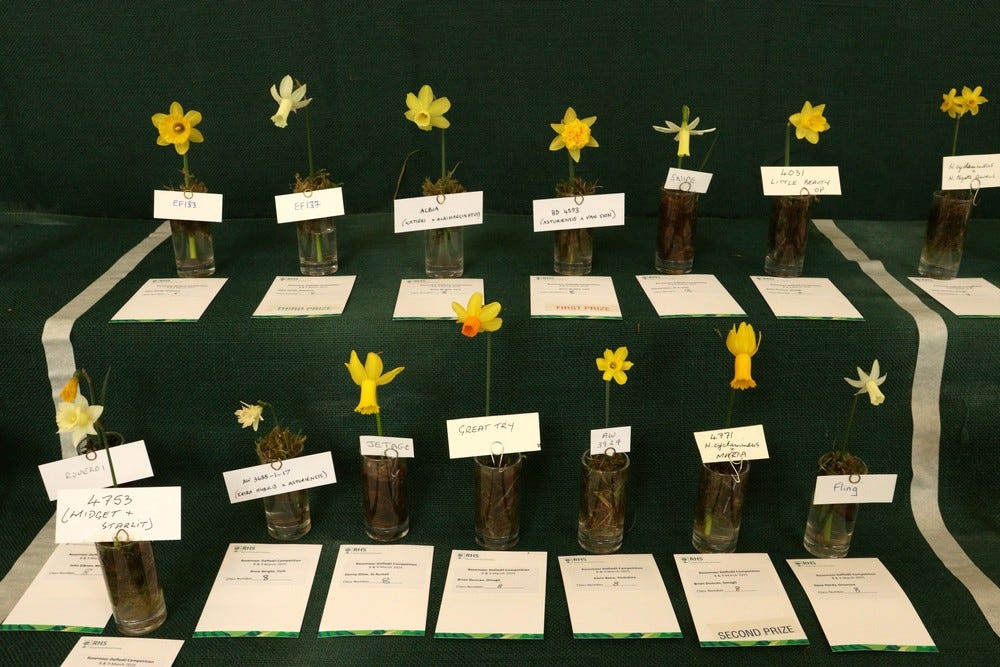
So wish me luck. It will be a busy couple of days, and while I will be footsore after two days of judging and stewarding I think I will have enjoyed it. It’s not an environment in which I feel particularly comfortable but I appreciate the opportunity to see so many beautiful flowers in one place.
But more than that I’m glad to be able to support those gardeners for whom this show is important. Some gardeners really look forward to it, taking pride in their wins or are just happy to take part. The show is a chance for like-minded people to get together over common interests; it nurtures a sense of community that can be a bit scarce in the gardening world.
And that is a cause worthy of my weekend.
Fascinating insight into the terrifying world of Flower Shows..I love to visit but have never, for a second, thought about entering. It seems like a brave and mildly bonkers thing to do. A friend has a garden at RHS Malvern this year, I think he's mad but I'm also a teeny but envious.
interesting to see highball glasses as the standard vessel now that floral foam is banned. personally I love the light they let in. a certain double headed daff?...would that be peach cobbler per chance?