
Ghost Gardens
Ethereal visitors from our horticultural past.

It rained this week. Soft rain fell for a few hours but contributed little beyond a temporary reprieve from the dust. Summer rain is often deceptive, appearing to be quite significant yet not soaking into the soil enough to be helpful.
This is not going to be another article about drought and water, topics covered incessantly by every gardener with access to the internet at the moment. No, today I’m going to talk about ghost gardens.
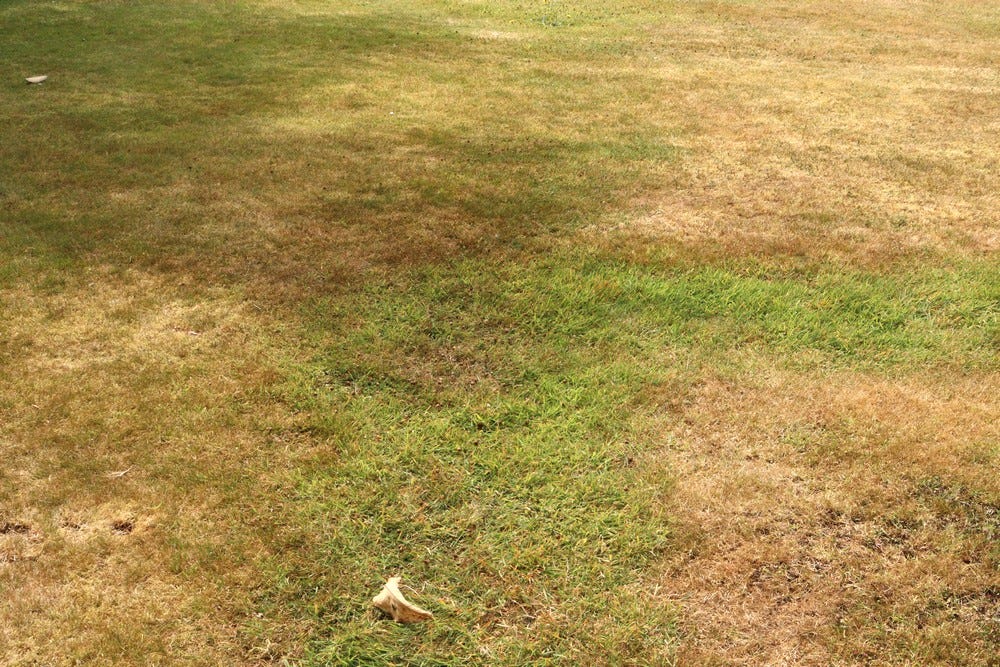
In one of my gardens the drought has rather helpfully shown the position of various buried pipes. Once a trench is filled and the grass grows back it can be very difficult to remember where underground services were laid. In this garden there are pipes from a neighbouring property alongside buried French drains laid to catch water as it moves through the soil.
A French drain is a trench filled with gravel, through which there is a perforated pipe that takes water away. Water percolates through the stones and into the pipe. However when this bit of low-tech drainage is buried it often becomes ineffective over time. The trench is lined with a geotextile membrane intended to keep soil separate from the stone, the idea being that water can pass through but not soil. This assumes, very wrongly, that soil doesn’t contain mobile particles small enough to either clog the gaps in the membrane or build up as fine silt in the stone or pipe. French drains are usually installed in heavier soils where the chances of fine silt clogging them up is pretty high.
Once the French drain is buried it’s impossible to even inspect the stone to see if silt is collecting. At least when a French drain is open to the sky – there to collect surface water – it’s easier for surface water to wash in and, hopefully, move any built up silt.
Buried stone-filled trenches means the turf grasses have less depth of soil below them, and when it gets dry it is these that go brown first; this is what has happened at my client’s house, but at least we have been able to map out exactly where these trenches and pipes are.
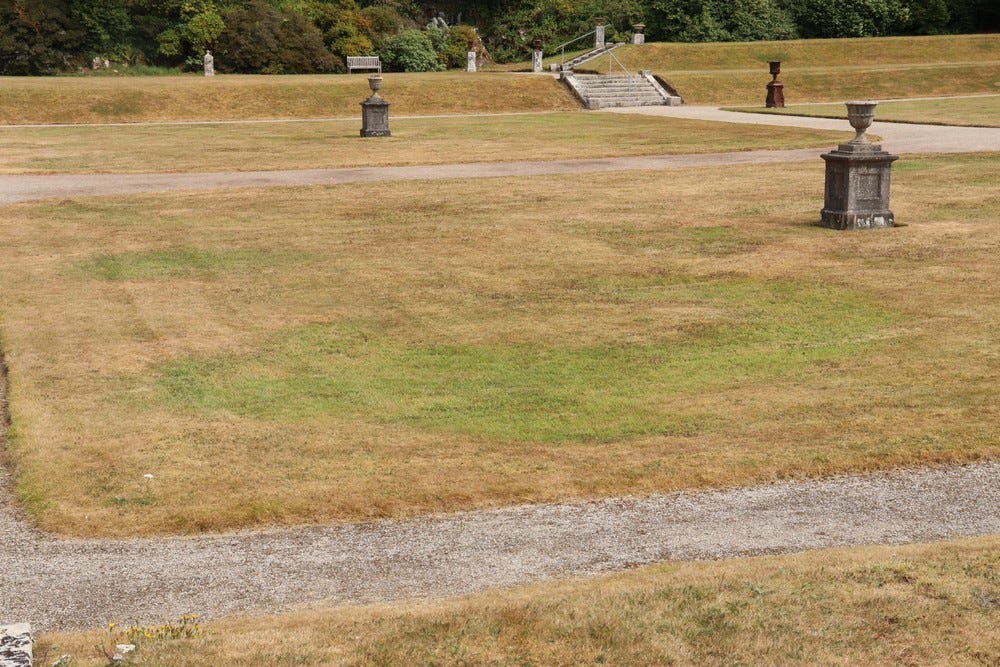
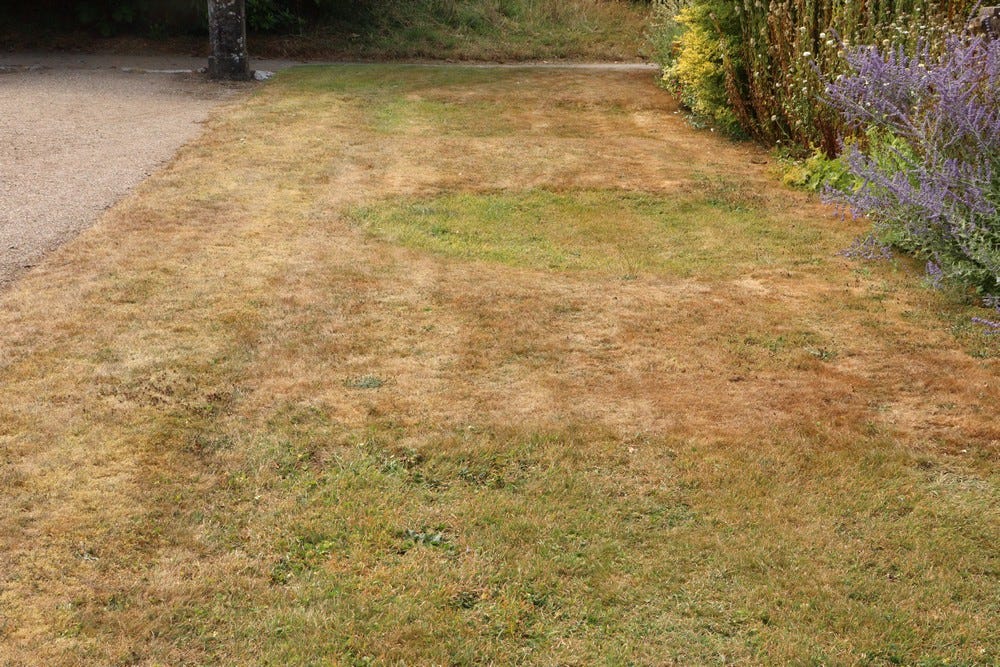
Conversely where soil is unusually deep the grass often stays green longer. Lawns turns beige-brown, punctuated by areas of verdant green. In historic gardens it’s not unusual for the ghostly outlines of old flowerbeds to emerge. It’s an interesting phenomenon and one that so often gets people talking.
The usual public response is to suggest restoring the lost flowerbeds to their former glory. There always seems to be a great enthusiasm for restoring things, up to the point where people are asked to donate their own time and money.
Restoring gardens is a nice idea in principle, but then comes the question of what happens once a garden is restored. Who will look after it? How will its upkeep be funded? From the moment the restoration is complete the battle to stave off decline begins. Leave the garden unattended for too long and it will soon become overgrown and the restoration project will have been a waste of time.
The ornate features of big old country house gardens weren’t lost to negligence but were deliberately filled in as part of efforts to reduce the manpower needed to maintain larger gardens. The First World War, when so many gardeners went to fight in the trenches, brought about the decline of big high-labour gardens. Gardeners who survived the war didn’t always go back to their old jobs; if you’d spent time in the mud of the trenches would you want to go back to your low-pay, low status job when cleaner and more respected options were available?
A lot of gardeners up to the first quarter of the 20th century came to gardening because they needed work, not because they necessarily had their hearts set on horticultural greatness. Particularly in rural areas employment options were limited. The Great War brought together men from all walks of life, and the world of the aristocracy – propped up by the ready availability of cheap staff – didn’t stand a chance.
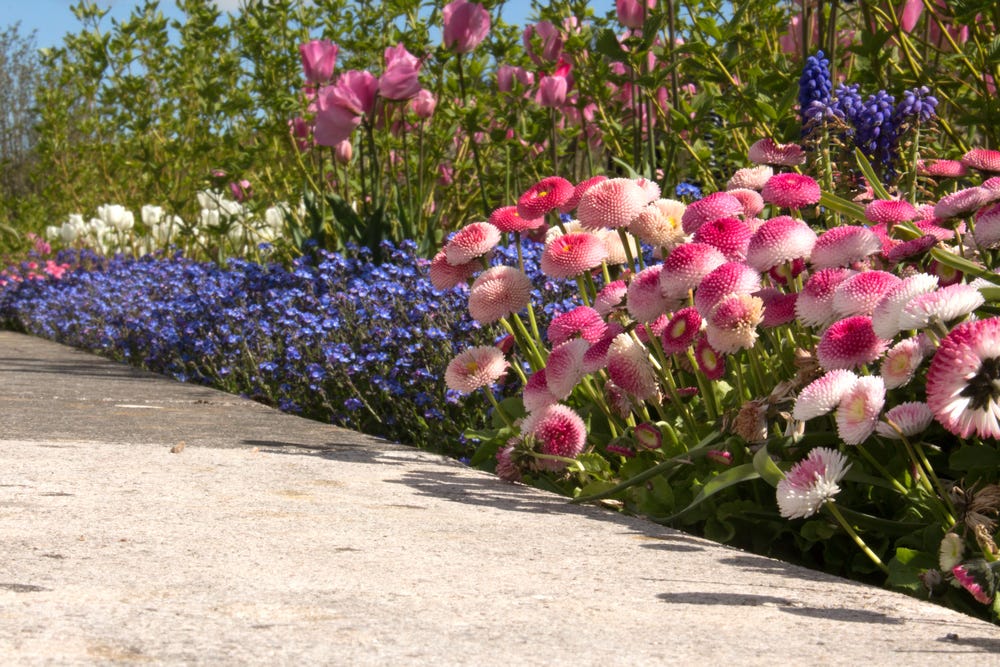
Gardens lost their gardeners, but also the whole socio-economic landscape of Britain was changing too. Garden became more expensive to run as the era of cheap labour faded away, so economies had to be made. Improved technology and machinery helped with some tasks but the lavish and complex features like formal flowerbeds and glasshouses just couldn’t be justified, so the decision was made to bring their time to an end, or in other words to rationalise the garden.
Sacrifice the features that took an extraordinary amount of time and labour to protect the garden as a whole.
These ghosts of lost gardens tell a much bigger story in the garden’s history: a chapter ended and a new chapter begun. The grassing over of parterres and ornate flowerbeds was not an act of destruction but a pragmatic decision made in changing times.
In an ideal world gardening would be a very well paid and respected career, and gardens would be tended by small armies of talented gardeners. Modern professional gardeners are expected to be far more skilled, as individuals, than gardeners of generations before but their income has not increased to reflect that responsibility.
“His gains are not great; he knows gold and
silver more as being of the colour of fruits and flowers than by
its presence in his pockets; he is subjected to that kind of labour
which renders him peculiarly liable to infirmity...”
Charles Dickens, speech to The Gardeners’ Benevolent Institution on the 14th of June 1852.
So-called market rates mean gardeners with responsibility even for high profile gardens are usually paid less than people in comparable roles for the same company or organisation. Gaps in the workforce, often caused by a cutting back of horticultural staff for financial reasons, are plugged by volunteers. However recruitment of volunteers is waning as the circumstances of modern life reduce the number of people able and willing to give their time.
The gardening world is constantly facing recruitment problems and the loss of skills, but there are too few people able, let alone willing, to devote their lives to a complex career with a lot of responsibilities while they struggle to make ends meet at home.
There’s a garden near where I live in Devon that is recreating a border designed by celebrated designer Gertrude Jekyll. Actually that’s not quite true; the border was designed by Jekyll but was never installed, so they’re actually building the border for the first time. I think it’s a bad idea. Sure it’s a nice project but my first question is why wasn’t the border built in the first place? The answer will certainly come down to resources. The estate was moderately affluent but not one that would have had a large number of gardeners even at its peak, and I’m confident that the cost of the project will have prevented it going ahead.
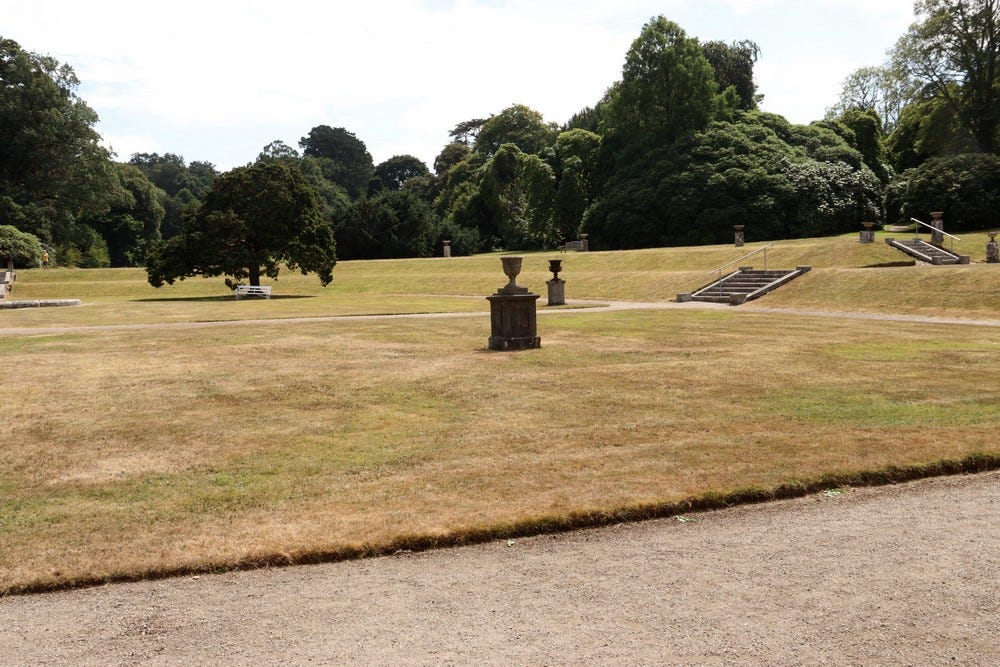
Worse than losing old gardens would be to restore or recreate them to lose them again to the same issues that caused their demise in the first place. Buried under lawns these old ornate gardens are laid to quiet and dignified rest. When droughts come their outlines emerge like a spectre in the mist to remind us that the gardens we see today are only one version of what has existed. It’s great that people take an interest, but at the same time it’s important not to get caught up in the idealistic rhetoric around restoration.
Ghost gardens show us, for a brief time, a glimpse into what a garden used to look like in the past. Let’s respect them and treat them as the curiosities that they are but concentrate on valuing what we have, and hopefully avoid the need to turf over the gardens of today.
With thanks to the Pencarrow Estate in Cornwall for allowing me to use their ghost garden as an illustration for this article.
I work weekly at a small estate, it was the base for American soldiers in the 2nd world war. The old helipad was turfed over, that section of the lawn is dessicated at the moment and the shape of the pad is very obvious compared to the rest of the the lawns. Interesting to see since mowing has stopped that there is lots of wild yarrow doing very well in that section!
One winter we went to stay in an hotel in the Lake District which our family had owned once.
And there came the beast from the east - snow!
Suddenly, out of my window, I could see the outlines of the lost garden that is in our photographs from the early twentieth century - brought back by the snow.