
About Bamboo
Myths and misinformation, and a different way to understand them.

Bamboos have become something of a pariah in recent years, a dramatic fall from grace after their de rigueur status just 20 years ago. The hit BBC makeover show Ground Force introduced a sort of ‘cookie cutter’ approach to planting: each week gardens got a Japanese maple, a water feature and a bamboo. And of course the obligatory decking. Bamboos went from obscure plants found in big old gardens to must-haves for anyone and everyone. They offered something very different to the traditional trees, shrubs and herbaceous plants grown before.
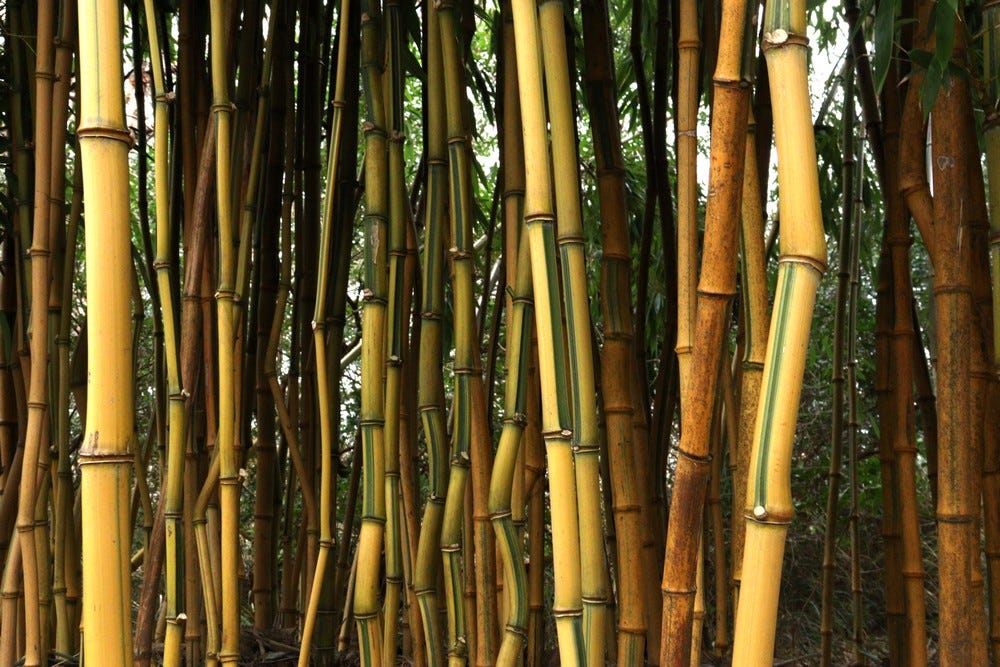
The problem for early adopters of anything new is that they are the people who are first to experience the problems. When a plant becomes an overnight sensation little is widely usually known about it, save for the information given out by nurseries eager to sell their plants. Long-term growers of bamboos were warning about their lack of suitability for most gardens, but such was the hype at the time that those warnings were simply ignored.
Bamboos are unsuitable for so many of the gardens in which they’re planted. They’re nowhere near as malleable as has been thought, and the easiest way to reframe bamboos in our minds is to think of them as big, multi-stemmed trees and not shrubs, grasses or anything else.
All bamboos are big. Some are short but grow very wide, while others grow very tall but are comparatively narrow at the base; all require a commitment to space. All bamboos have big and strong root systems, although the morphology of these varies. Bamboos fall into two groups: leptomorphs and pachymorphs.
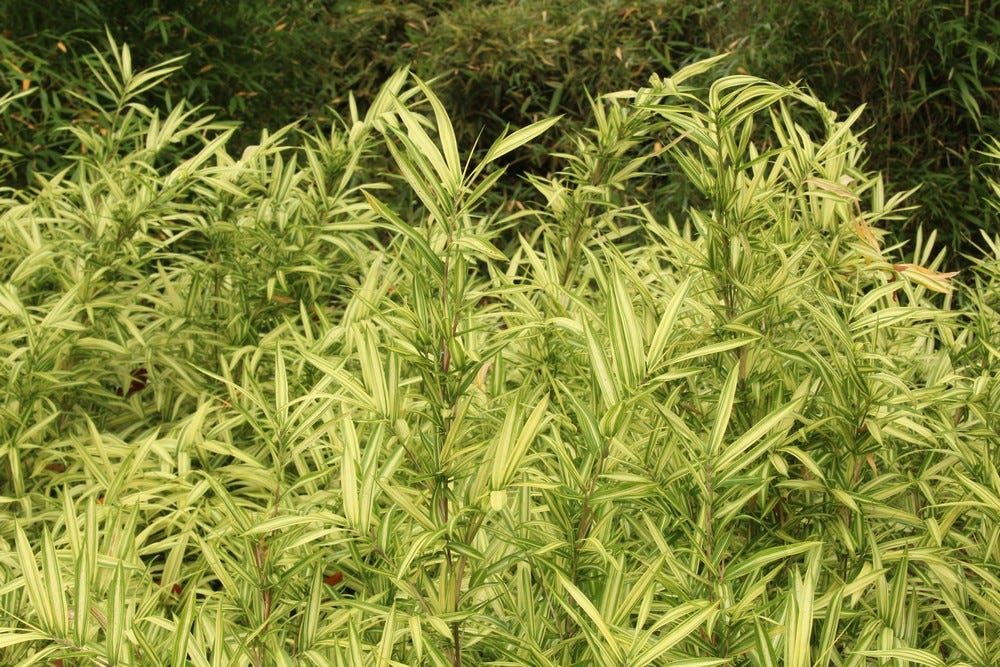
Leptomorph bamboos spread. In fact many of them spread rather a lot. They send their rhizomes far from the main clump, and then each node becomes either an upward-facing cane, downward-facing roots, or branches that go out at an angle to further the plants colonisation efforts. Bamboo rhizomes are powerful and their growth can be rapid, and the first time the gardener realises something is happening is when a great big bud shows up in the middle of the lawn.
Some leptomorphs are well known for their spread. Sasa veitchii is regarded – not unfairly – as truly invasive, while other thin-stemmed genera like pleioblastus, pseudosasa and a few others would be similarly regarded if they’d ever been as widely planted in the first place. What’s possibly a little surprising is that all species of phyllostachys are leptomorphs. Some species have already disgraced themselves to the point where they’re almost impossible to get hold of now, but all phyllostachys species and forms have the ability to run. So why don’t they?
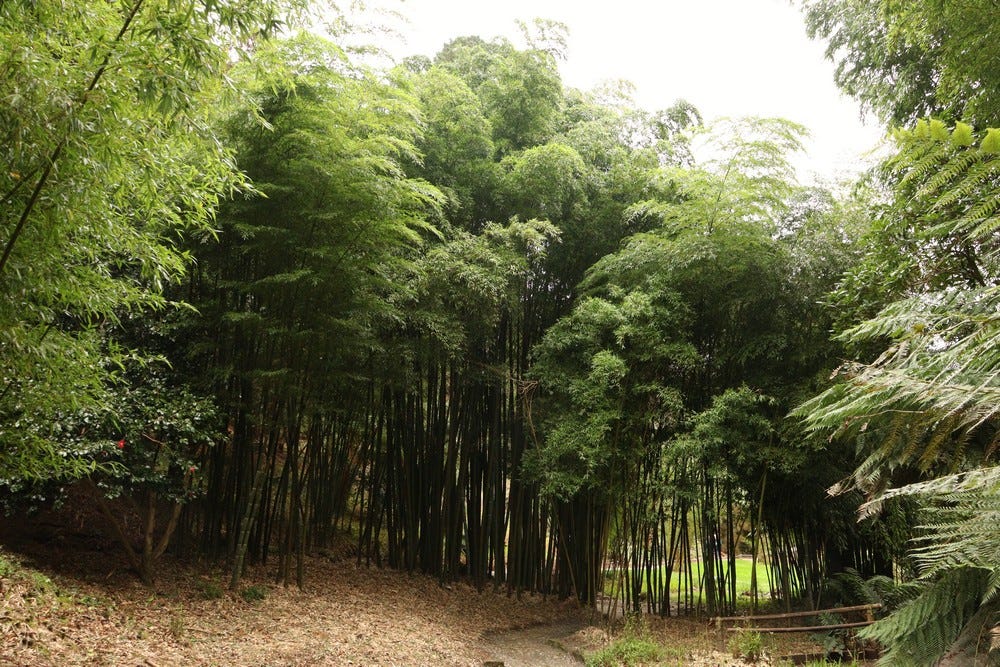
It comes down to their growing conditions: something is making ‘good’ bamboos turn ‘bad’. I’ve experienced it for myself and heard plenty of stories from other gardeners. A phyllostachys sits there in the garden for years making a nice slowly increasingly clump without issue; one day you find a cane poking out where it shouldn’t, then another and another, often several metres or yards from the main clump.
It’s going to be down to one of three things. Either the plant has taken years or even decades to settle in properly and is now ready to spread, it becomes stressed by a change in conditions and this triggers the need to spread out in search of new resources, or the balance of heat and moisture is just right for it to feel at home. Nobody seems quite sure what’s happening, and different factors may affect different species. This causes issues because some of the species and forms of phyllostachys still generally considered ‘garden-safe’ are suddenly proving themselves to be anything but.
In the wild phyllostachys is a genus from fairly low altitudes in monsoon regions of Asia. It’s a genus well adapted for a climate of serious summer heat and moisture, which allows it to spread and form vast monocultures. It’s a world away from the climates most of us enjoy in Europe and North America, but we are getting these prolonged hot spells in summer, and if the plant has found a good supply of moisture in the ground then this might just trigger a response.
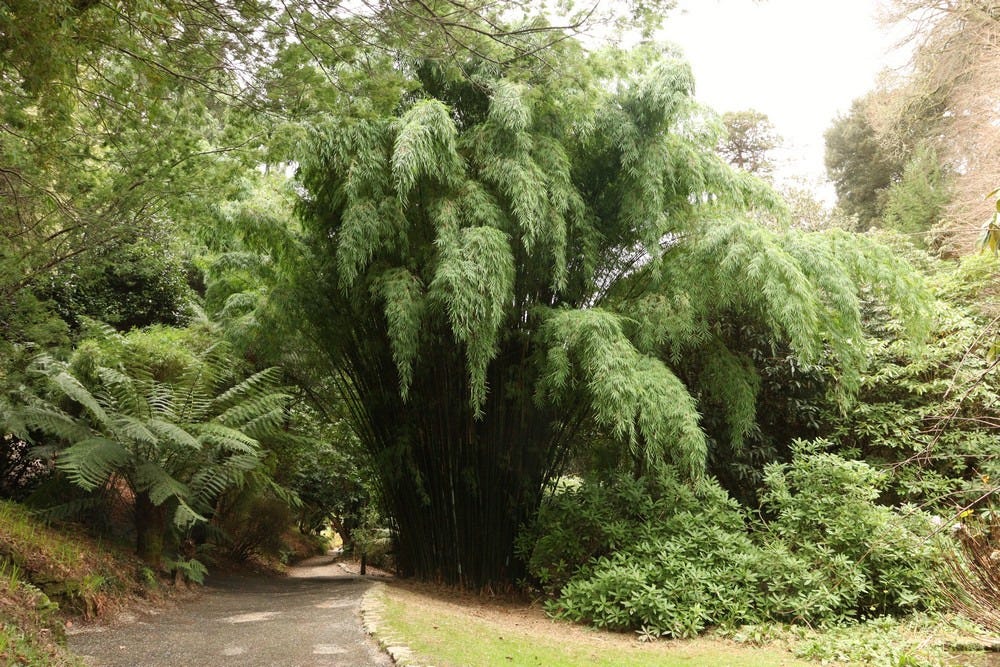
Far safer for the majority of gardens are the pachymorph bamboos. These are the ones whose rhizomes can never, ever, spread beyond a short distance out from the main clump. Just because they make a fairly tight clump does not mean that these are small bamboos; quite a few will make plants 5-7m, that’s 16-22 feet, or more in height, but their rhizomes are totally incapable of spreading further than a very short distance at a time. The tallest pachymorh bamboos tend to splay outwards at the top, making them broadly vase-shaped, while shorter species tend to grow barrel-shaped with their canes growing straight up. Fargesias and borindas are all, to the very best of my knowledge, pachymorph bamboos.
There are also other differences to the growth habits of pachymorph bamboos. Generally speaking, most of the species we grow from the borindas and fargesias originate at higher altitudes, meaning they have increased cold tolerance but also a slightly different way of growing. Typically canes will extend to their full height in their first season but actually expand their foliage during their second year. It’s not uncommon for gardeners to call the nursery that sold the bamboo to make sure this is normal behaviour; I promise that it is.
Phyllostachys, sasas and pseudosasas, pleioblastus and so on will make full height in their first summer. Phyllostachys edulis, one of the less hardy of the genus grown in the milder gardens of the UK, can grow around 20cm or eight inches a day in the milder parts of Britain; in the wild each cane can grow significantly faster. Even more impressive when you consider that each cane can be the thickness of your arm.
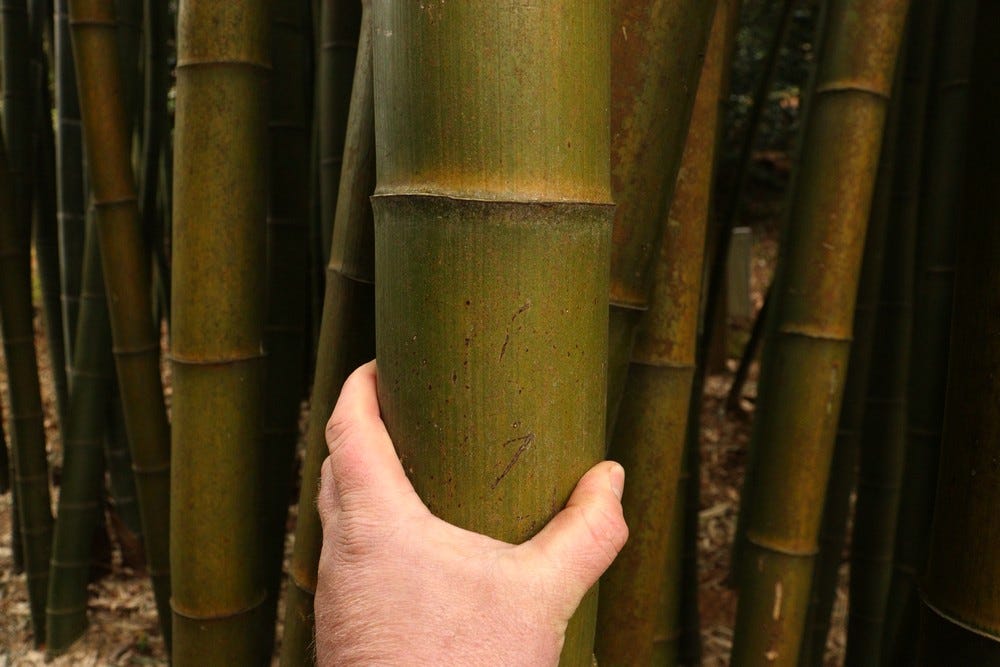
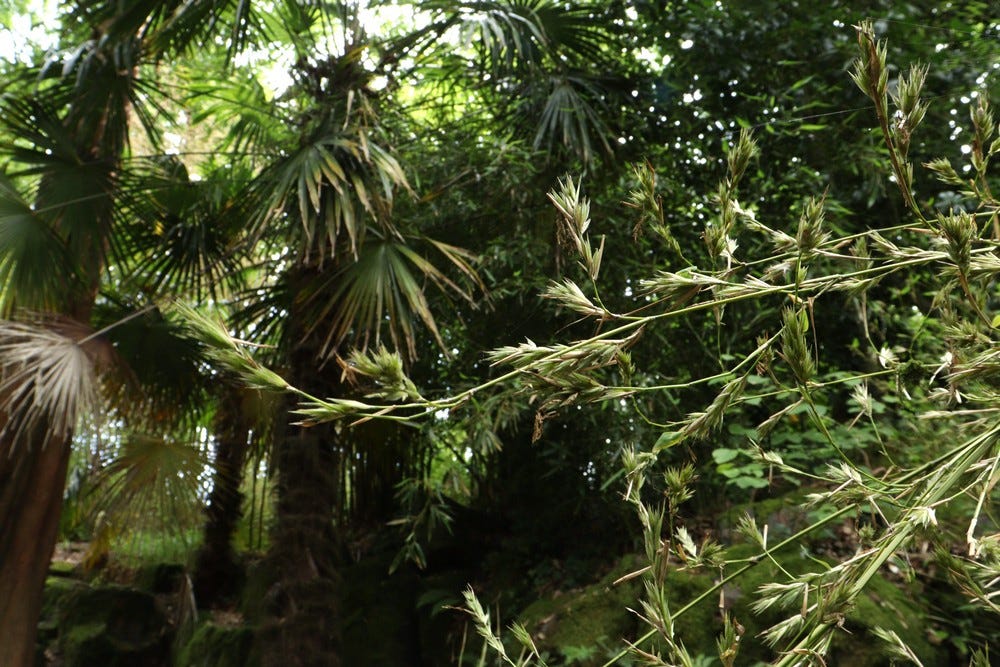
Wild bamboos can form massive colonies, even forests in the case of the largest species. While their spread is extensive the plants can also propagate themselves by seed. Bamboos flower and seed once every 70-100 years or so, depending on species. Contrary to popular belief, the flowering of a bamboo isn’t always fatal. It’s not unusual for bamboos to return from the dead, as it were, years after they have flowered and seemingly ‘died’. Much relies on gardeners being able and willing to leave the clump as it is for however long it takes to recover; this might be possible in a large garden where the eyesore can be ignored, but is unrealistic in a smaller space or more prominent position.
The flowering and seeding of any given species of bamboo in cultivation appears to be synchronised to the point where you might even wonder if the plants are able to communicate with each other across vast distances! Once one plant of a species starts to flower every other example in cultivation, across the world and from massive well-established plants to those fairly freshly planted, will flower within five years. This is not down to some sort of ‘bamboo telepathy’ or anything as exciting as that, but is instead down to the life cycle of bamboos, and how they were introduced and subsequently propagated. The absolute majority of bamboos were introduced to cultivation from seed sent from wild plants, and these were subsequently propagated by division and shared around.
Plants, like all living things, have two ‘ages’. There is the physical age but also a genetic age. Each year that passes from the point of germination adds a year to both ‘ages’, but when a plant is cloned through vegetative propagation – cuttings or divisions – its genetic age remains that of the original parent even though the young plants are only physically very young.
It’s easiest to explain this with shrubs. Let’s say a shrub germinated 100 years ago, was planted out and it was decided that it was worth propagating and naming. A cutting taken two years ago and planted out today would give you a plant that is physically two years old, but genetically 100 years old. A big problem is that while conventional clonal propagation can rejuvenate something physically it can’t stop the genetic clock. However plants grown from tissue culture – where plants are grown from stem cells in laboratories – does seem to revert a plant to a younger genetic age.
Therefore when the ‘clock’ in the DNA of the bamboo says it’s time to flower all examples of that species flower at the same time.
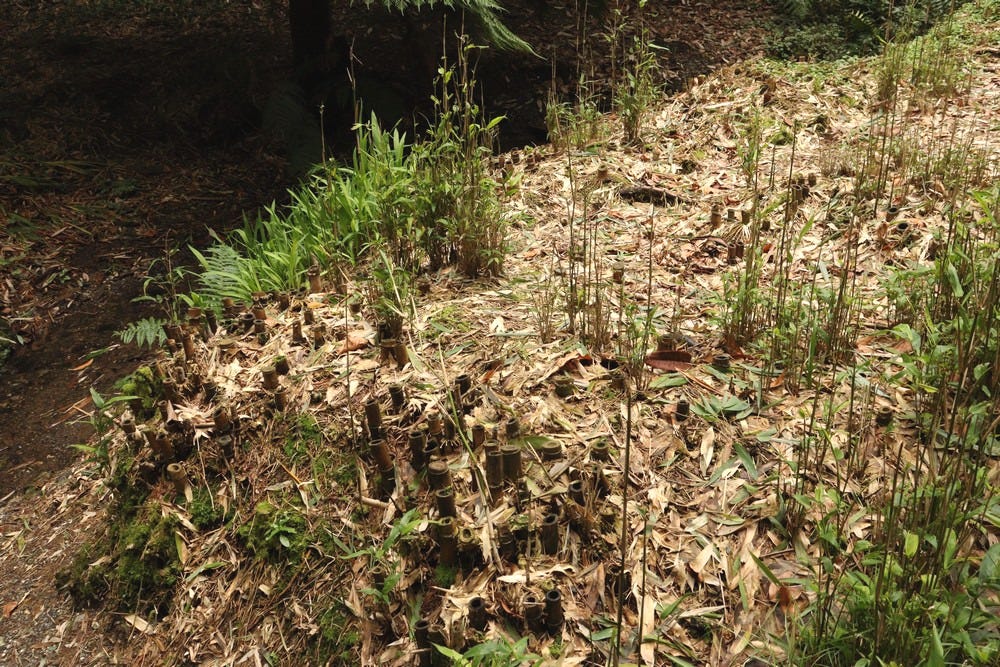
Baby bamboos exist in a short grass-like stage for anything up to a decade before making their proper canes. This means nurseries must grow new species or young plants from seed or tissue culture for years before they reach a size gardeners will pay money for. This is why bamboos will never be cheap to buy, although I would argue that the most expensive bamboos of all are the ones we buy that then go on to flower and die back a few years later.
So are bamboos invasive?
Certainly the thin-caned short Japanese bamboos like pleioblastus and sasa are considered a nuisance even in their own native areas. These bamboo can spread rapidly, choking out other vegetation and even sizeable trees. Regeneration is impossible in places where these species have the upper hand. The same is true in cultivation, with the added insult that such species have been deliberately planted. In traditional Japanese gardening living bamboo is considered ‘unclean’ and not to be grown, although more modern Japanese gardens have taken both Chinese and western influences and allow some bamboo. Japan has no native thick-stemmed bamboos, so for centuries has grown Chinese bamboo species as a building material; canes from these Chinese species are used to make fences and barriers etcetera in gardens. Where bamboo is cultivated in Japanese gardens it will almost always be a Chinese species.
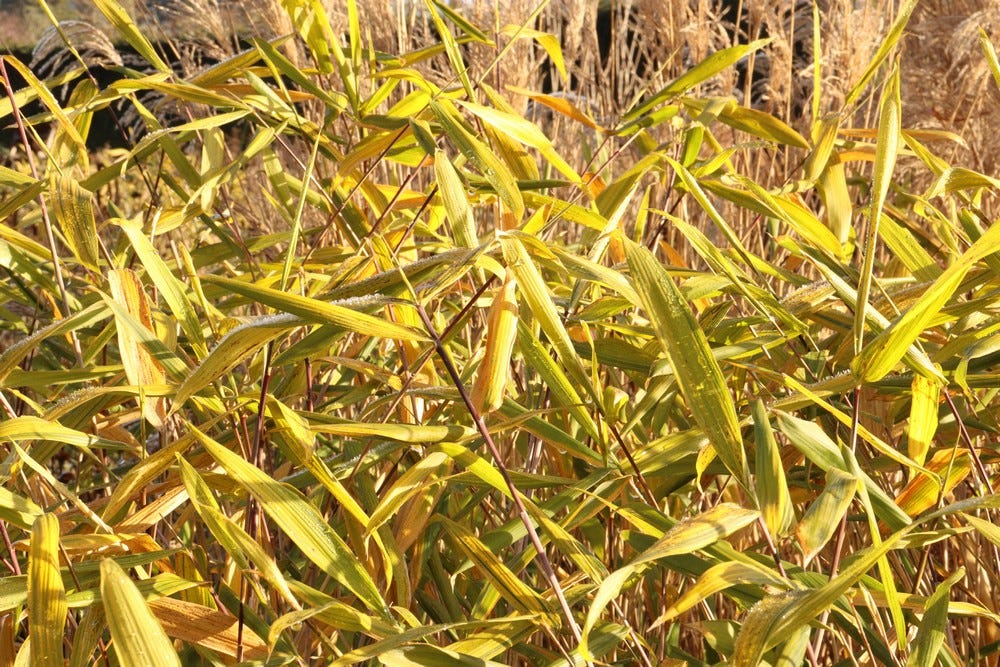
I would steer clear of the short, thin-stemmed bamboos in gardens. I don’t think they offer enough to be worthy of the space they occupy. If you already have them then the best way to control their rate of spread while also keeping them looking fresh is to chop them back to the ground, either every year or every second year, in late winter. Don’t be nice about it; take a hedge trimmer and hack the plant down to stubble. The new new growth will come back nice and fresh, and the energy used to replace lost canes is energy that would otherwise be used to conquer your garden. If you’re not able or willing to carry out this task then give these bamboos a wide berth.
As for the other options, much depends on your needs and expectations. If you have a large area to fill and like the idea of having a bamboo grove or forest, plant some leptomorphs like phyllostachys and let them get on with it. If you have a more modest space then grow a pachymorphs like borinda or fargesia. If your garden is small or you can’t accommodate a large root system then choose anything other than a bamboo. Sure you can try to keep them in pots or confined within root barriers, but ultimately these are large plants and like any large plant you’ll end up with an unhappy rootbound plant that looks jaded no matter how much you try to care for it.
Just touching on buying bamboos: a useful rule of thumb is that the less value for money a bamboo appears to represent the more likely it is to be well behaved in the garden. The more vigorous bamboos are easier to propagate in large numbers and root far more rapidly in their pots, so are either cheaper or look like better value for money because you’re getting a bigger plant. If you’re looking for a bamboo that will behave itself then you’re usually looking for a fairly small plant that’s a bit more expensive. You’re highly unlikely to find larger specimens of the best-behaved bamboos for sale anywhere. Personally I would approach a specialist nursery rather than buying from a generic plant seller; give them an idea of how much space you have and what conditions, and ask for their personal recommendations.
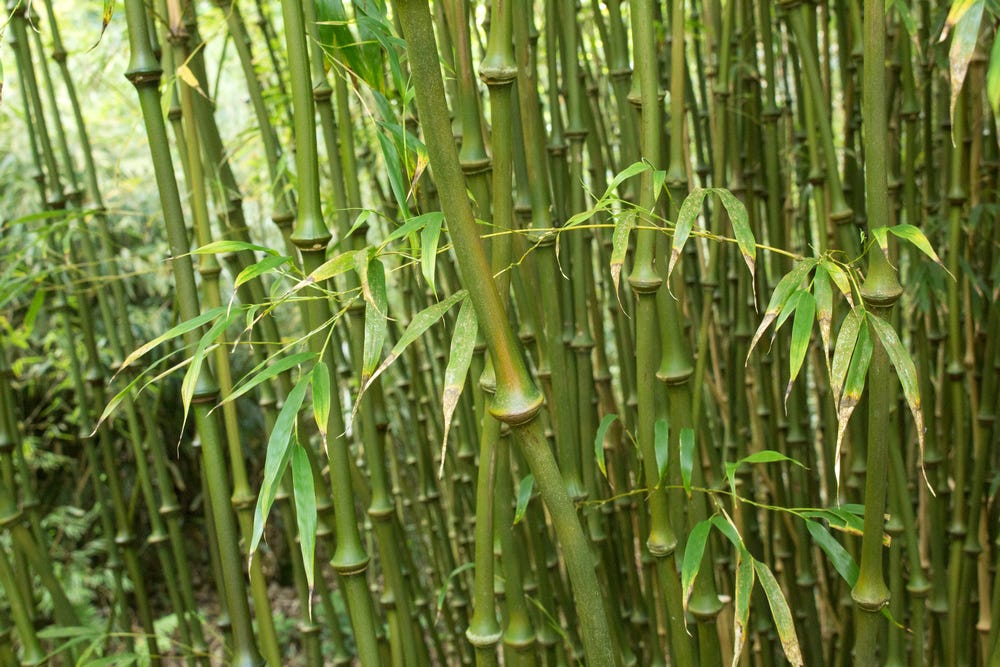
All the problems associated with bamboos grown in sub-optimum conditions, including tight spaces, are the same as with large trees grown the same way. In parts of London bamboos have caused big problems; they’ve been planted in small spaces and near houses as privacy screening, but their thirsty root systems can shrink London’s clay soils and, in extreme cases, cause subsidence and damage to buildings and walls. The questing roots – evolved to cope with difficult growing conditions in the wild – will happily find weak points in drains too. Bamboos have become public enemy number one for this, but the truth is that the same things would happen with any large woody plant grown in the same sort of positions. It’s not uncommon to hear about bamboos breaking through the barriers people make to try and keep them under control; trees will do the same thing but just not as rapidly.
The best barrier materials are the heavy duty flexible ones. A brick or concrete wall would usually be enough to keep most plants in their place, but bamboos are used to pushing their way through rocky and heavy soils in their native habitats; a solid wall will just be a little challenge for them. Flexible barriers work by gently guiding the growing point either back into the clump or over the top of the barrier, at which point it can be cut off. Where people invariably come unstuck with these bamboo barriers is by making too small a space for the plant to grow in the first place. Barriers need to make a space that will accommodate the bamboo for decades of growth, not just for a few years.
Bamboos are hungry and thirsty plants. This is enormously important to bear in mind anywhere, but especially if you grow a bamboo in a container. This does not mean that you can’t overfeed and overwater a bamboo; I knew a gardener years ago who emptied a whole sack of fertiliser onto a bamboo growing in what I would have called a wet soil. She was very excited to see it grow very quickly, but when the first storm came along the whole plant shattered. Bamboos are at their best in reasonable garden soil and preferably soil that does not dry out too much. Whether you’re planning to grow your bamboo in a pot, within a barrier or in the open ground, remember that they really need space to grow.
It’s unfair to blame bamboos for poor judgement, what is ultimately the failure of gardeners and garden designers to understand the plants they grow. Bamboos should, like large trees, be the preserve of those gardeners with sufficient space to grow them properly, not crowbarred into unsuitably small spaces. You cannot prune them the same way that you would prune a tree or shrub – the structure of each cane is formed in the emerging bud so cut canes can’t rejuvenate themselves – and dividing dense clumps of canes and rhizomes is a thankless task.
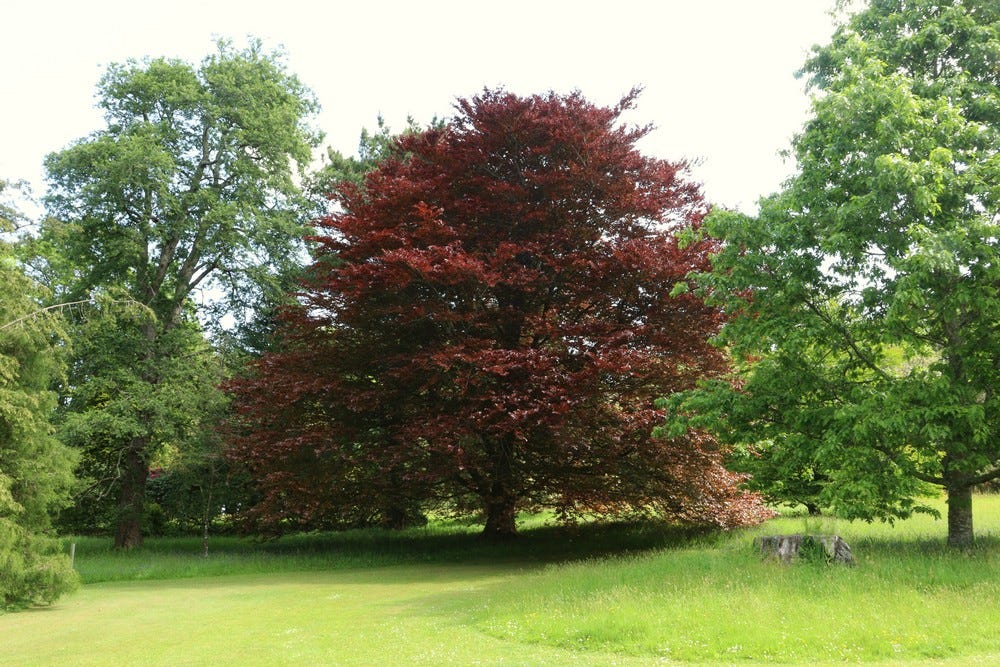
There is also the issue of aesthetics; bamboos have a very particular architecture that makes them surprisingly difficult to place. You can’t plant a bamboo in a rose garden, for example, and expect it to look right. Choosing the space for a bamboo deserves the same amount of time and consideration warranted by a key specimen tree expected to grow for a century or more, and to a large size.
Where appropriate spaces can be found they can be truly magnificent plants. The fear of bamboos has come from their widespread inappropriate cultivation, coupled with a good dollop of scaremongering from those who would probably hate bamboos even if they were the very best behaved of all our garden plants.
Modern gardening is blessed with an enormous diversity of plants to choose from, but we’re also cursed with woefully inadequate access to accurate information and considered opinion. If this situation had been different in the early 2000s then bamboos would be far better appreciated but also far less widely grown.
Thanks for this interesting article.
My neighbour had their garden designed about 15 years ago and bamboo was planted against (their) fence. It’s now coming into our garden. I’ve tolerated it so far but am now wondering how I should control it.